Culture & Arts
The intersection of culture, arts, and technology has fundamentally transformed how humanity creates, experiences, and preserves creative expression. From ancient cave paintings to immersive digital installations, the ways we interact with art and cultural heritage continue to evolve. Today, digital innovation presents both unprecedented opportunities and complex challenges for artists, institutions, and audiences worldwide.
This transformation touches every aspect of cultural life: how communities connect across borders, how museums safeguard fragile artifacts, how visitors engage with exhibitions, and how artists reach global audiences. Understanding these shifts is essential for anyone seeking to participate meaningfully in contemporary cultural discourse, whether as a creator, curator, collector, or enthusiast. The following exploration examines the key forces reshaping our cultural landscape and what they mean for the future of human creativity.
How Digital Platforms Are Reshaping Cultural Connection
Digital platforms have fundamentally altered the fabric of cultural exchange, creating new possibilities for connection while simultaneously introducing fresh tensions. Think of these platforms as vast digital town squares where billions of voices converge, each bringing their unique cultural perspective to a shared space.
Building Authentic Communities in Virtual Spaces
Genuine community formation online requires more than simply gathering people in the same digital space. Successful virtual cultural communities share several characteristics: clear shared values, mechanisms for meaningful participation, and structures that encourage depth over superficial engagement. Consider how specialized forums for traditional craft techniques allow practitioners from different continents to share knowledge that might otherwise remain isolated within small geographic regions.
The challenge lies in maintaining cultural authenticity while scaling these connections. Communities thrive when they balance openness to new members with preservation of core cultural elements that define their identity. Moderation approaches, participation rituals, and communication norms all play crucial roles in this delicate balance.
Navigating Cross-Cultural Communication Challenges
Digital etiquette varies dramatically across cultures, creating fertile ground for misunderstanding. What one culture considers polite directness, another may perceive as offensive bluntness. Time expectations for responses, appropriate use of humor, and even interpretation of emoji can differ significantly across cultural contexts.
These misunderstandings are compounded by the erosion of local nuances in global digital discourse. Dominant languages and cultural frameworks often overshadow minority perspectives, creating homogenizing pressures that threaten cultural diversity. The platform architectures themselves—designed primarily in specific cultural contexts—embed certain assumptions about appropriate interaction that may not translate universally.
The Echo Chamber Effect on Cultural Empathy
Algorithmic content curation creates filter bubbles that can paradoxically isolate users even while connecting them to millions. When platforms prioritize engagement over exposure to diverse perspectives, users increasingly encounter only viewpoints that reinforce existing beliefs. This mechanism poses particular risks for cultural empathy—the ability to understand and appreciate perspectives from different cultural backgrounds.
Breaking through these echo chambers requires intentional effort: actively seeking content from unfamiliar cultural sources, participating in cross-cultural virtual events, and critically examining the assumptions embedded in one’s own cultural framework. Virtual events optimized for genuine cultural exchange—rather than superficial tourism—create structured opportunities for this deeper engagement.
Why Digital Heritage Preservation Matters Now
Cultural heritage faces an urgent existential threat. Climate change, armed conflict, urban development, and natural deterioration endanger countless irreplaceable sites and artifacts. Digital preservation technologies offer a critical lifeline, capturing detailed records of at-risk heritage before it’s lost forever.
The Race Against Time: Digitizing At-Risk Sites
The urgency of heritage digitization cannot be overstated. Archaeological sites face erosion, historical buildings deteriorate, and fragile documents decay. Recent conflicts have demonstrated how quickly cultural heritage can be destroyed, making comprehensive digital documentation a form of cultural insurance. High-resolution 3D scanning, photogrammetry, and detailed archival photography create permanent records that serve multiple purposes:
- Enabling virtual access for global audiences unable to visit physical sites
- Providing reference materials for potential future restoration efforts
- Facilitating scholarly research without subjecting fragile originals to handling
- Creating educational resources for younger generations
Physical Restoration vs. Digital Preservation
This represents a false dichotomy—both approaches serve complementary functions. Physical restoration maintains tangible connections to the past and preserves the authentic material experience of cultural objects. Digital preservation ensures that knowledge survives even if physical artifacts don’t, while making heritage accessible to far wider audiences.
The most effective strategies employ both approaches strategically. Physical conservation prioritizes the most significant and salvageable items, while comprehensive digital documentation captures everything possible, including objects too fragile for physical preservation or sites too dangerous to access regularly.
Creating Accessible Archives Online
Digital archives democratize access to cultural heritage, removing geographic and economic barriers that historically limited who could engage with important collections. A researcher in a remote location can now access manuscripts housed thousands of miles away. Students can examine high-resolution images of artworks their schools could never afford to display.
However, creating truly accessible archives requires addressing several technical and legal challenges. Storage optimization for high-resolution cultural assets demands significant infrastructure investment. The copyright trap surrounding public domain art—where institutions claim rights over digital reproductions of centuries-old works—often restricts access that should be freely available. Navigating these complexities while maintaining sustainable archive operations requires careful balance between preservation, access, and institutional needs.
Augmented Reality: Transforming Cultural Experiences
Augmented reality technology is revolutionizing how people engage with cultural spaces and artistic content. By overlaying digital information onto physical environments, AR creates layered experiences that can illuminate context, reveal hidden stories, and make culture more accessible to diverse audiences.
Enhancing Engagement Without Creating Distraction
The power of AR in cultural contexts lies in its ability to provide additional context without removing visitors from the physical experience. Imagine pointing your device at an ancient artifact and seeing a reconstruction of its original appearance, or viewing a historical building with an overlay showing how it looked centuries ago. When implemented thoughtfully, these enhancements deepen understanding rather than replacing direct observation.
The risk, however, is that technology becomes the focus rather than the art itself. Visitors absorbed in screens miss the subtle details of physical objects, the spatial relationships within galleries, and the contemplative dimension of cultural engagement. Successful AR implementations maintain careful balance, using technology to illuminate rather than obscure the primary cultural content.
Educational Impact and Retention
Research indicates that AR experiences can significantly improve educational retention compared to traditional interpretive methods. The interactive, multi-sensory nature of AR engagement creates stronger memory formation. Students who manipulate virtual reconstructions of historical objects or navigate AR-enhanced historical sites demonstrate better recall and deeper conceptual understanding.
This educational power makes AR particularly valuable for complex cultural concepts that benefit from visualization. Abstract ideas become concrete, distant historical periods feel immediate, and connections between disparate elements become visually apparent.
Implementation Considerations: App-Based vs. WebAR
Cultural institutions implementing AR face a fundamental choice between dedicated applications and web-based solutions. App-based AR typically offers more sophisticated features and smoother performance, but requires visitors to download software—a significant barrier that many won’t overcome. WebAR provides immediate access through web browsers without installation, sacrificing some advanced capabilities for greater accessibility.
For institutions prioritizing maximum reach, WebAR often proves more effective despite technical limitations. The lower barrier to entry means more visitors actually use the technology. Developing AR experiences without extensive coding knowledge has become increasingly feasible through specialized platforms, making this technology accessible even to institutions with limited technical resources. Planning the flow of AR-enhanced tours requires careful consideration of visitor movement patterns, technological capabilities, and educational objectives.
NFTs and the Future of Art Ownership
Non-fungible tokens have introduced radical new possibilities for art ownership, distribution, and economics. While often misunderstood or dismissed as speculative hype, NFTs represent genuine innovation in how digital scarcity and provenance can be established for creative works.
Democratizing Art Access and Ownership
NFTs potentially democratize both art creation and collection by removing traditional gatekeepers. Artists can reach global audiences directly without gallery representation, retaining greater control over their work and larger portions of sale proceeds. Collectors anywhere in the world can participate in art markets previously restricted to wealthy urban centers or exclusive auction houses.
This democratization extends to new forms of fractional ownership and alternative exhibition models. Digital art can be owned exclusively while simultaneously being viewed publicly—resolving the historic tension between private collecting and public access. Artists can program ongoing royalties into smart contracts, ensuring they benefit from secondary market appreciation of their work.
Environmental and Economic Considerations
The environmental debate around crypto art centers on the energy consumption of blockchain networks, particularly those using proof-of-work consensus mechanisms. Critics accurately note that some NFT transactions consume significant electricity. However, the landscape continues evolving, with more efficient blockchain technologies and carbon offset initiatives addressing these concerns.
Economic volatility presents another significant consideration. The speculative nature of NFT markets creates substantial risks for collectors. Prices can fluctuate dramatically based on trends, celebrity endorsements, or market sentiment rather than artistic merit. Timing drops for maximum engagement becomes a strategic consideration, but also raises questions about whether artificial scarcity serves art or merely market manipulation.
Displaying and Experiencing Digital Art
As digital art gains cultural legitimacy, questions about appropriate display become increasingly important. How should NFT art be experienced? High-quality digital frames in homes? Projected installations in galleries? Virtual reality environments? Each presentation method creates different experiential and social contexts for the work.
The tension between exclusive ownership and public viewing takes new forms in digital contexts. While anyone can view a digital image file, NFT ownership represents a distinct form of cultural capital—authenticated possession of the “original” in a medium where reproduction is perfect and costless. This challenges traditional understandings of what ownership means in artistic contexts.
The transformation of culture and arts through digital innovation continues to accelerate, presenting opportunities for greater access, preservation, and connection alongside challenges requiring thoughtful navigation. Whether engaging with virtual communities, exploring digitized heritage, experiencing AR-enhanced exhibitions, or considering digital art ownership, understanding these evolving dynamics empowers more meaningful participation in our shared cultural future. Each development discussed here represents an invitation to engage more deeply with specific aspects that resonate with your particular interests and needs.
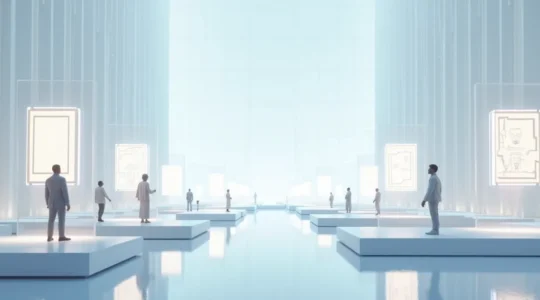
How Galleries Curate NFT Exhibitions That Transcend Physical Borders?
Successful NFT curation is not a technological exercise; it’s a masterclass in strategic business design that treats digital works as liquid, valuable assets. Exhibition success hinges on aligning ownership models, market timing, and valuation frameworks with crypto-economic cycles. Authenticity and…
Read more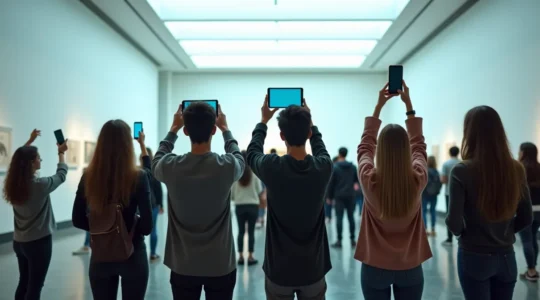
How Museums Use Immersive Augmented Reality to Engage Gen Z Audiences?
The key to engaging Gen Z isn’t just adding AR; it’s designing frictionless experiences that enhance, not distract from, the artifacts. Interactive AR can improve memory retention of historical facts by over 10% by creating spatial learning environments. WebAR is…
Read more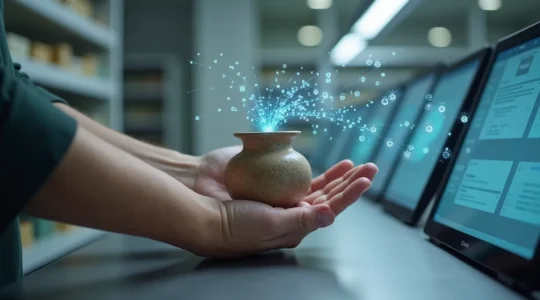
How Digital Mediums Are Preserving Global Heritage for Future Generations
Effective digital preservation of cultural heritage is not merely a technological process but a series of critical curatorial decisions. The true value lies not in the act of 3D scanning, but in the strategic choices made about what to digitize,…
Read more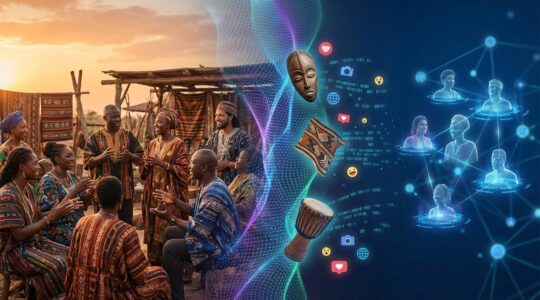
How Social Media Algorithms Alter Real-World Cultural Interactions
The common belief that algorithms create new behaviors is a misconception; they merely hijack and amplify our most ancient social drivers for connection and status. Digital platforms translate complex human desires into simple, quantifiable metrics (likes, shares), which in turn…
Read more