Automotive & Transport
The automotive landscape is undergoing its most profound transformation in over a century. Electric vehicles have moved from niche curiosity to mainstream reality, fundamentally changing how we think about personal transportation. This shift extends far beyond simply swapping one power source for another—it represents a complete reimagining of vehicle architecture, driving dynamics, refueling logistics, and the relationship between driver and machine.
Understanding electric mobility requires navigating a complex web of interconnected systems: battery chemistry and thermal management, charging infrastructure and connector standards, motor configurations and regenerative systems, digital interfaces and evolving autonomous capabilities. For those approaching this technology for the first time, or seeking to deepen their knowledge, grasping these fundamental concepts becomes essential to making informed decisions and maximizing the benefits of electric transportation.
Making the Transition to Electric Mobility
The decision to embrace electric propulsion involves more than environmental considerations—it requires a practical assessment of how this technology fits into daily routines and long-term financial planning.
Choosing Between PHEV and BEV Architectures
The fundamental choice for many buyers centers on plug-in hybrid electric vehicles (PHEVs) versus battery electric vehicles (BEVs). PHEVs offer a safety net with their internal combustion backup, typically providing 30-80 kilometers of electric range before the gasoline engine activates. This dual-system approach suits drivers who frequently exceed the electric range or lack reliable charging access. However, this versatility comes with complexity—two complete powertrains mean higher maintenance potential and reduced cargo space.
BEVs eliminate this compromise entirely, offering ranges that now regularly exceed 400 kilometers on a single charge. The simplicity of a single electric motor system translates to fewer mechanical components subject to wear. Yet this simplification demands a fundamental shift in thinking about refueling logistics and trip planning.
Timing Your Purchase and Understanding Depreciation
The electric vehicle market exists in a state of rapid evolution, creating unique timing challenges. Battery technology improves measurably each year, with energy density gains of approximately 5-8% annually. This progression means vehicles purchased today will inevitably be eclipsed by superior options within a few years—a reality that complicates resale value predictions.
Current data suggests electric vehicles depreciate faster than their conventional counterparts during the first three years, primarily due to technological advancement and fluctuating incentive programs. However, the total cost of ownership often favors electric propulsion when factoring reduced fuel and maintenance expenses. A vehicle that requires no oil changes, transmission services, or exhaust system repairs accumulates significant savings over a typical ownership period of five to seven years.
Environmental Considerations Across the Lifecycle
The environmental equation extends beyond tailpipe emissions to encompass manufacturing impacts. Battery production, particularly the mining and processing of lithium, cobalt, and nickel, carries a substantial carbon footprint. A typical electric vehicle begins its life with a larger manufacturing burden than a comparable gasoline vehicle—often equivalent to 8-12 tons of CO2.
The crossover point where this deficit reverses depends heavily on the electricity grid’s composition. In regions powered predominantly by renewable sources, an electric vehicle can achieve carbon neutrality within 15,000-25,000 kilometers. In coal-heavy grids, this extends to 100,000 kilometers or more. Understanding your local energy mix becomes crucial to accurately assessing environmental benefits.
How Electric Motors Transform Driving Performance
Electric propulsion fundamentally alters the mechanical relationship between driver input and vehicle response, creating a driving character unlike anything achievable with internal combustion.
The defining characteristic of electric motors—instant torque delivery—stems from basic electromagnetic principles. Unlike piston engines that must build compression and reach optimal RPM ranges, electric motors produce maximum torque from zero RPM. This translates to acceleration that feels immediate and linear, without the lag associated with turbocharger spool-up or the need to downshift for passing power.
The choice between single-motor and dual-motor configurations significantly impacts both performance and efficiency. Single-motor layouts, typically driving the rear wheels, maximize range by minimizing mechanical losses. Dual-motor systems sacrifice 5-10% of range for the benefits of all-wheel traction and enhanced acceleration. Some implementations allow the front motor to disengage during steady cruising, reclaiming much of this efficiency penalty.
Regenerative braking represents one of electric propulsion’s most distinctive features—the ability to recapture kinetic energy during deceleration. Rather than converting momentum into waste heat through friction brakes, the motor reverses its role, acting as a generator to return energy to the battery. Mastering the interplay between regenerative intensity and conventional braking becomes essential to maximizing range. In optimal conditions, aggressive regenerative settings can recover 15-25% of energy that would otherwise be lost.
The reliability profile of electric motors differs markedly from internal combustion. With fewer moving parts—no valves, camshafts, or timing systems—catastrophic mechanical failure becomes rare. However, the silent operation that many celebrate also complicates diagnostics. A bearing developing play or a cooling pump losing efficiency may progress unnoticed without the auditory cues internal combustion provides. Regular thermal imaging and vibration analysis become valuable diagnostic tools.
Understanding Battery Performance and Range
The battery pack represents the heart of electric vehicle technology, and comprehending its behavior under varying conditions proves essential to realistic range expectations.
Real-World Range Versus Testing Protocols
Official range figures derived from standardized testing—WLTP in Europe, EPA in North America—provide useful comparison baselines but rarely reflect actual driving conditions. WLTP testing typically yields optimistic figures, while EPA protocols align more closely with real-world results. However, neither accounts for individual driving styles, terrain variations, or climate extremes.
Actual range commonly falls 10-30% below official ratings, with the variance widening in challenging conditions. Highway driving at sustained speeds above 110 km/h dramatically increases aerodynamic drag, reducing range far more than city driving with its frequent regeneration opportunities. Understanding these testing limitations prevents the disappointment that comes from unrealistic expectations.
Cold Weather Performance and Battery Chemistry
Temperature sensitivity remains lithium-ion technology’s most significant practical limitation. Battery chemistry relies on ionic movement through electrolyte solutions—a process that slows dramatically as temperatures drop. At -10°C, a battery may deliver only 60-70% of its rated capacity, with available power for acceleration also diminishing.
The compounding factor in cold conditions involves cabin heating. Unlike internal combustion vehicles that harvest waste engine heat, electric vehicles must draw heating power directly from the battery. Running climate control in winter conditions can consume 3-5 kW continuously—equivalent to adding a significant phantom passenger that constantly drains range.
Pre-conditioning the battery while still connected to charging infrastructure offers a powerful mitigation strategy. Bringing the battery to optimal operating temperature (typically 20-25°C) before departure maximizes both available range and charging acceptance rates at the next stop.
Battery Longevity and Depth of Discharge
Modern battery management systems carefully guard against the extremes that accelerate degradation. Depth of discharge—how deeply the battery is drained during each cycle—directly impacts longevity. Consistently draining to 10% remaining charge before recharging degrades cells faster than maintaining charges between 20-80%.
The thermal runaway risk, while statistically rare, requires robust thermal management systems. Runaway occurs when a cell overheats, triggering a chain reaction in adjacent cells. Quality battery packs incorporate multiple safeguards: individual cell monitoring, active cooling systems, and physical barriers between cell groups. Modern implementations have reduced this risk to levels comparable to gasoline fire hazards.
Mastering the Charging Ecosystem
Adapting to electric propulsion demands reimagining the refueling paradigm entirely, shifting from centralized gas stations to a distributed network of charging options with vastly different capabilities.
Home Charging Infrastructure
For most electric vehicle owners, home charging becomes the primary refueling method, fundamentally changing the relationship with energy replenishment. Installing a dedicated Level 2 charger (typically 7-11 kW) allows a complete overnight recharge from daily driving depletion. This requires:
- Electrical panel assessment to ensure adequate capacity (often 200-amp service)
- Dedicated circuit installation, typically 40-60 amp rated
- Proper outdoor-rated equipment if installing in exposed locations
- Consideration of future needs if multiple vehicles will require charging
The convenience of departing each morning with a full battery eliminates the dedicated refueling stops that internal combustion demands, representing one of electric ownership’s most appreciated advantages.
Public Charging Strategy and Infrastructure Navigation
Long-distance travel requires engaging with public DC fast charging infrastructure, where understanding charging curve physics becomes crucial. Charging rates aren’t constant—they follow a curve that peaks typically between 10-60% state of charge, then tapers significantly to protect battery longevity.
A vehicle advertising 150 kW peak charging rarely maintains this rate throughout the session. It might achieve 140 kW briefly at 25% charge, drop to 80 kW by 60%, and taper to 30 kW above 80%. This curve means that charging from 10-60% often takes the same duration as 60-85%, making extended charging sessions progressively less efficient.
Optimizing stop duration requires targeting the high-efficiency portion of the curve. Rather than charging to 100% at each stop, strategic planning suggests charging just enough to reach the next high-speed charger with 10-15% buffer, minimizing total time spent charging.
Connector Standards and Payment Fragmentation
The charging landscape remains complicated by competing connector standards. CCS (Combined Charging System) dominates in Europe and increasingly in North America, while NACS (North American Charging Standard), originally Tesla’s proprietary connector, is gaining broader adoption through partnership agreements.
Payment fragmentation presents ongoing frustration. Unlike the universal credit card acceptance at gas stations, public charging often requires multiple provider apps, memberships, and payment systems. Some networks still deploy chargers that refuse credit cards, demanding pre-registered accounts. This fragmentation, combined with infrastructure reliability issues—non-functional units, occupied stations, or connectivity failures—necessitates backup planning for long trips.
Digital Interfaces and Vehicle Control
Electric vehicles frequently pioneer interface paradigms that minimize or eliminate physical controls in favor of screen-based interactions. This consolidation offers flexibility—functions can be updated via software—but introduces usability and safety considerations.
The trend toward burying essential functions within multi-layer menu systems creates distraction risks. Adjusting climate temperature or fan speed through three screen taps demands visual attention that a physical knob permits without looking. The National Highway Traffic Safety Administration research indicates that tasks requiring more than two seconds of eyes-off-road time double collision risk.
Manufacturers attempting to address this through voice command systems achieve mixed results. When functioning optimally, voice control allows eyes-on-road operation. However, recognition accuracy varies with accent, ambient noise, and command phrasing. Systems that require exact syntax (“Set temperature to 21 degrees”) prove less intuitive than those accepting natural language (“I’m cold”).
The debate between haptic feedback and smooth glass surfaces highlights the sensory importance of tactile response. Capacitive buttons on smooth surfaces offer no confirmation without looking, while haptic feedback provides physical acknowledgment of input. Some implementations compromise with force-sensitive controls that click mechanically despite flat surfaces.
Screen failure risk, while statistically low, carries outsized consequences when a single display controls all vehicle functions. Redundancy through backup physical controls for critical functions—hazard lights, window defrost, gear selection—represents prudent design, though minimalist approaches sometimes sacrifice this safety margin for aesthetic goals.
The Path Toward Autonomous Driving
Electric vehicle platforms, with their drive-by-wire architecture and computing resources, provide ideal foundations for advanced driver assistance systems (ADAS) and eventual autonomous capabilities.
Current implementations center on Level 2 autonomy—systems that can control steering and speed simultaneously but require constant driver supervision. Level 3, where the vehicle assumes responsibility under specific conditions (allowing true driver disengagement), remains limited to narrow geographic areas and operating conditions. The distinction matters legally and practically: Level 2 places all responsibility on the driver even during automated operation, while Level 3 shifts liability to the manufacturer during automated periods.
Sensor fusion—combining data from cameras, radar, ultrasonic sensors, and sometimes lidar—attempts to create comprehensive environmental awareness. Each sensor type offers distinct strengths: cameras excel at classification (reading signs, identifying objects), radar penetrates weather and measures velocity, lidar provides precise distance mapping. Yet the limits of this fusion become apparent in edge cases: unusual objects, contradictory sensor data, or degraded conditions that compromise multiple sensor types simultaneously.
The phantom braking phenomenon illustrates these limitations vividly. Overpasses can trigger false positives where the system interprets bridge support structures as collision threats, applying sudden braking on highways. Similarly, shadows across roadways or reflective surfaces sometimes register as obstacles. These occurrences, while improving with software updates, remind drivers why maintaining attention remains crucial even with sophisticated assistance systems.
Monitoring driver attention presents its own challenges. Systems using steering wheel torque sensors can be fooled by simply resting a hand on the wheel, while camera-based attention monitoring raises privacy concerns. Striking the balance between ensuring engagement without creating nuisance alerts remains an evolving challenge.
Mass adoption of true autonomy (Level 4-5) faces not only technical hurdles but profound legal and ethical questions. Liability frameworks, insurance models, and the philosophical challenges of programming ethical decision-making into algorithms remain largely unresolved. The timeline for widespread autonomous deployment extends further into the future than early optimism suggested, with measured deployment in constrained environments likely preceding general-purpose autonomy by many years.
Electric mobility represents not merely a propulsion change but a comprehensive reimagining of personal transportation. From battery thermal management to charging logistics, from regenerative braking to evolving autonomous capabilities, each system interconnects to create an experience fundamentally different from conventional vehicles. Success in this transition demands understanding these interconnected technologies, managing realistic expectations, and adapting habits to leverage electric propulsion’s unique advantages while accommodating its current limitations.

Who Is Liable When Autonomous Navigation Causes an Accident?
Contrary to the belief that autonomous accident liability is a simple choice between the driver and the manufacturer, the legal reality is far more complex. The true determinant of fault lies not in the aftermath but in the specific, predictable…
Read more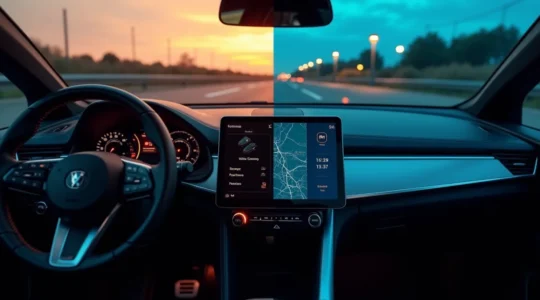
Screens vs. Buttons: Which Cockpit Setup Is Safer for Drivers?
The shift to touchscreen-only cockpits is not a simple design evolution; it’s a measurable degradation of ergonomic safety. Data shows that interacting with a touchscreen for basic functions like climate control takes exponentially longer and requires more “eyes-off-road” time than…
Read more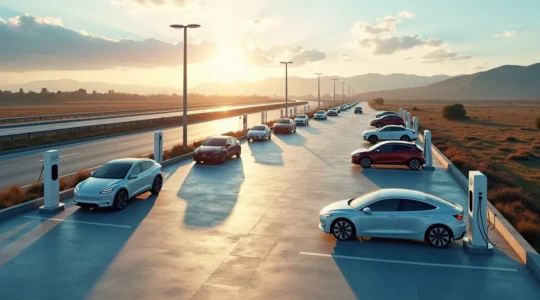
How to Flawlessly Plan Fast-Charging Stops for EV Trips Over 500km
The key to a stress-free long EV trip isn’t a single app, but a resilient strategy that anticipates the charging network’s inherent flaws. Master the 80% charging rule to save time and preserve your battery’s long-term health. Build a “digital…
Read more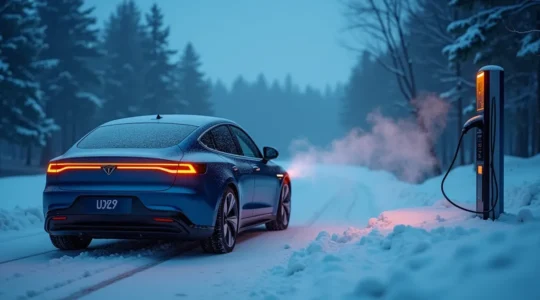
How to Maximize Battery Autonomy in Cold Weather Conditions?
In summary: Winter range loss is not a defect but a predictable result of battery chemistry; the cold increases internal resistance and forces the car to use energy for heating itself. Pre-heating your battery *while plugged in* is the single…
Read more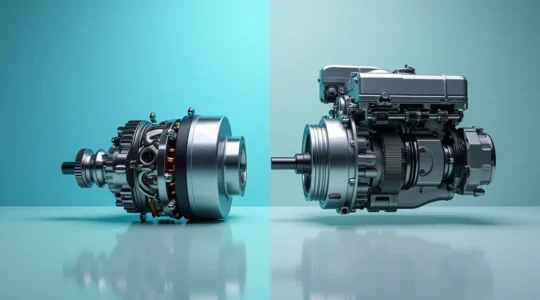
Why EV Powertrains Require Less Maintenance Than Combustion Engines?
The lower maintenance cost of electric vehicles is not merely due to having fewer parts; it represents a fundamental paradigm shift from managing unpredictable mechanical wear to monitoring predictable electrical and thermal systems. Systemic simplicity drastically reduces the number of…
Read more
How the EV Revolution Is Quietly Reshaping Your Daily Driving Habits
Switching to an EV is less about losing spontaneity and more about gaining intentional control over your daily mobility. Home charging becomes a simple, overnight ritual, not a daily chore you need to constantly think about. Your car’s software updates…
Read more